Optimized wind energy generation through the integration of DC-coupled battery energy storage systems
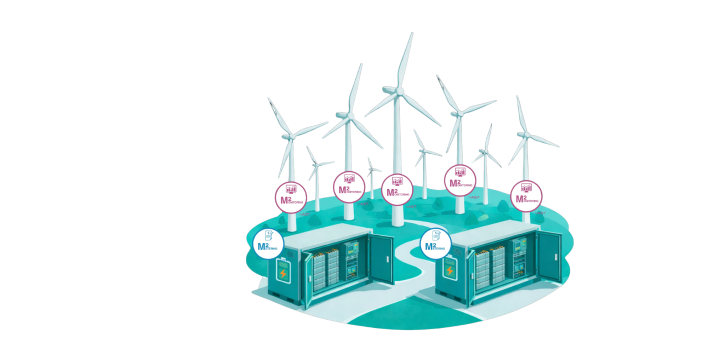
Modern wind farms generate large amounts of renewable energy, but without grid-supportive integration into the infrastructure, delays in commissioning as well as shutdowns—or at least curtailments during operation—may occur. By combining them with DC-coupled battery energy storage systems (BESS), such disadvantages can be avoided. Peaks in energy generation can be buffered through intermediate storage, and feed-in can generally be shifted to times with higher prices. The DC coupling of the storage systems is significantly more efficient than comparable AC-coupled storage, as conversion losses are avoided.
MONITORING (REPORTING)
- Visualization of data
- Focus on historical periods
- Reporting and transparency
METERING (BILLING)
- Highly accurate, real-time measurement
- Control & Process Optimization
The certified DC meters from AST additionally enable:
- The use of the storage system for arbitrage trading, as green and grey electricity can be distinguished through measurement
- A reduction in investment costs through smaller cable cross-sections and fewer inverters.
-
Optimized utilization of limited grid connection capacities.
Through these advantages of the described co-location concept, the payback period and the overall economic viability of wind energy projects can be significantly improved.

The use of DC meters enables precise measurement of energy flows directly on the DC side, creating transparency in the interaction between wind turbines and battery storage systems. This allows co-location projects to be managed more efficiently, grid connections to be used optimally, and energy losses to be reduced. DC metering therefore forms the foundation for more economical operation and the intelligent integration of renewable energy into the power system.